
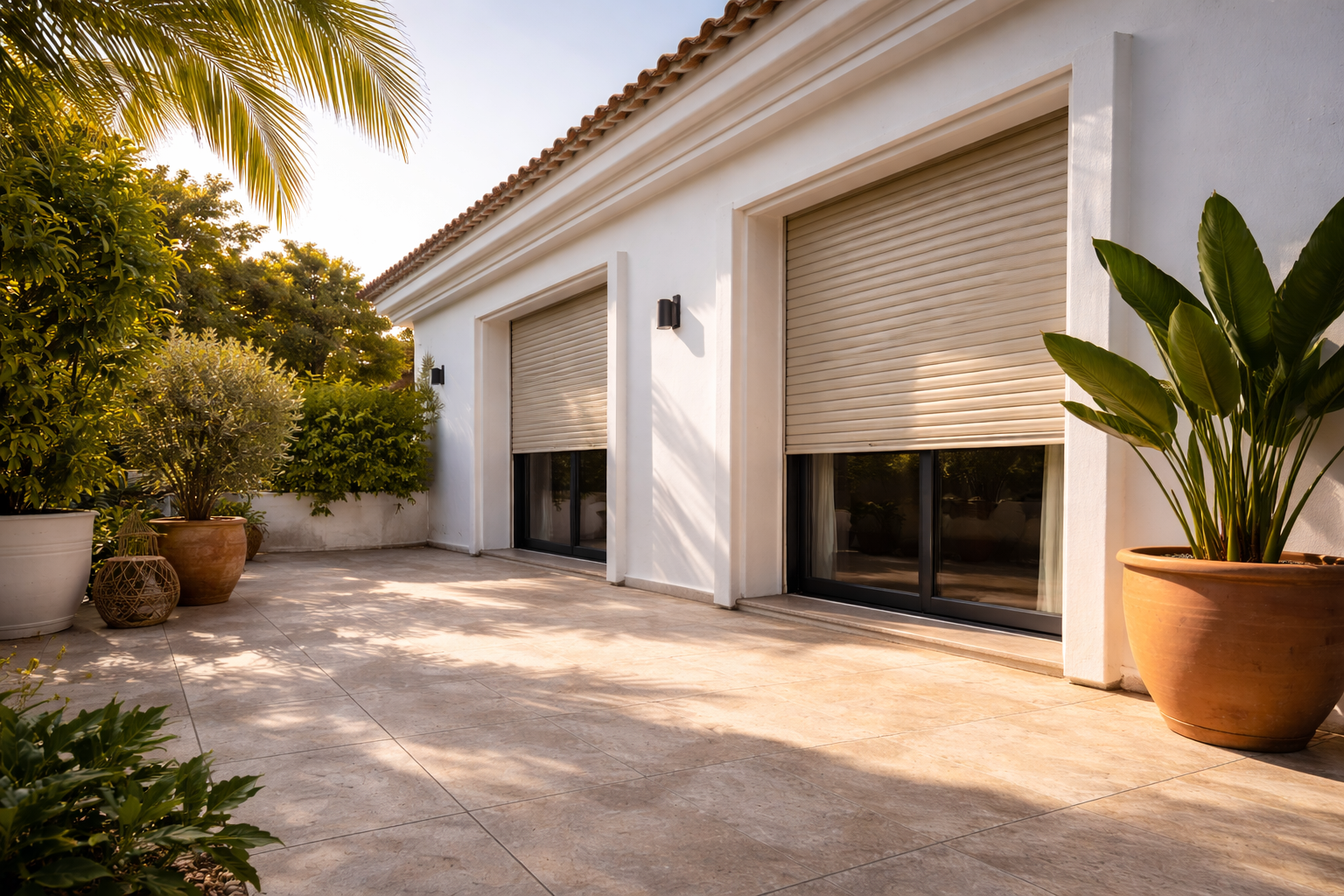
Many second-home owners believe that if a property is not being used, it is somehow being preserved.
After all, no guests, no wear, no activity — no problems.
But on the Costa del Sol, empty properties rarely remain “as they were left.” They evolve. Quietly.
And often, not for the better.
When you lock the door and leave for weeks or months, the house does not freeze in time. Materials continue reacting to climate. Air continues circulating — or not circulating. Systems remain inactive. And small changes begin to accumulate.
The danger of vacancy is not dramatic damage. It is slow, unnoticed deterioration.
The Silence Is What Causes the Problem
When a property is occupied, even occasionally, it benefits from something simple but powerful: attention.
You notice when a room smells different.
You hear when a system sounds unusual.
You see when a seal begins to loosen or when humidity gathers in a corner.
Daily presence acts as informal supervision.
Remove that presence, and the house becomes silent.
A small drip under a sink may continue for weeks.
A window seal may slowly allow moisture in.
A drain may begin to clog before a summer storm.
Nothing urgent. Nothing obvious. Until it is.
The Costa del Sol Climate Is Gentle — but Persistent
One of the misconceptions about this region is that because winters are mild and summers are sunny, properties face fewer risks.
In reality, coastal humidity and temperature fluctuations create ongoing stress on materials.
Closed homes retain moisture more easily. Wardrobes and storage areas with limited airflow can develop condensation. Wooden elements may expand slightly. Paint may begin to bubble in unnoticed areas.
At the same time, strong summer sun gradually weakens exterior seals, shutters, and silicone joints.
These are not catastrophic events. They are cumulative ones.
A house left unattended for three months may look fine at first glance. But small shifts may already be underway.
Water Rarely Announces Itself
Water damage in vacant properties is rarely dramatic.
More often, it begins with something subtle — a weakened pipe joint, a small boiler irregularity, a loose fitting under a sink.
In an occupied home, someone would notice a stain or a smell.
In an empty one, moisture spreads quietly.
By the time the issue is discovered, flooring may be affected, cabinetry swollen, or walls weakened.
Regular inspection is not about expecting disaster. It is about intercepting minor issues early.
Systems Also Deteriorate When Idle
There is a common belief that less use means less strain on systems.
But complete inactivity has its own consequences.
Air conditioning units left unused for long periods may accumulate internal dust or develop minor mechanical faults that only appear when switched on under full summer heat.
Electrical panels that remain untouched for months may reveal sensitivity when suddenly reactivated.
Plumbing that sits stagnant can produce odors or mineral buildup.
A property that is only activated upon arrival experiences abrupt stress — instead of steady oversight.
Exterior Areas Suffer More Than You Think
On the Costa del Sol, terraces and outdoor spaces are constantly exposed.
Even when unused, wind moves debris into drains. Irrigation systems can malfunction. UV exposure weakens outdoor materials. Storms test drainage capacity.
Without periodic checks, small exterior issues can quickly affect interior structure.
And because these areas are often the last to be reviewed after a long absence, problems tend to be discovered late.
Vacancy Feels Safe — But It Isn’t Neutral
Perhaps the most misleading aspect of an empty property is that nothing appears wrong.
You lock the door. The house looks clean. Everything is in place.
But three months later, the same house may not be in the same condition.
Ownership does not pause when you leave.
The climate continues. Materials react. Systems age. Small imbalances grow.
Vacancy is not protection. It is simply lack of visibility.
The Difference Between Uncertainty and Control
You do not need to live in your second home year-round to protect it.
But you do need structure.
Periodic supervision — even brief, professional checks — allows early detection of humidity buildup, plumbing irregularities, system failures or exterior vulnerabilities.
The goal is not constant presence.
It is reducing uncertainty.
Because when you return to your property, the difference between relief and stress often depends on what happened while you were away.
Your Property Is Still Active — Even When You’re Not
An empty house is not inactive. It is simply unattended.
And unattended properties, especially in coastal climates, tend to deteriorate faster than occupied ones — not because they are abused, but because no one is looking.
Structured supervision transforms vacancy from risk into controlled absence.
And that distinction is what protects both your peace of mind and your long-term investment.
Need Structured Property Supervision While You’re Away?
If you are unsure how often your property should be inspected during extended absence, a structured supervision plan can help prevent small issues from becoming costly problems.
If something about your property worries you — humidity, plumbing, long absences — feel free to reach out and tell us what concerns you. We’ll help you assess the level of oversight your home actually needs.